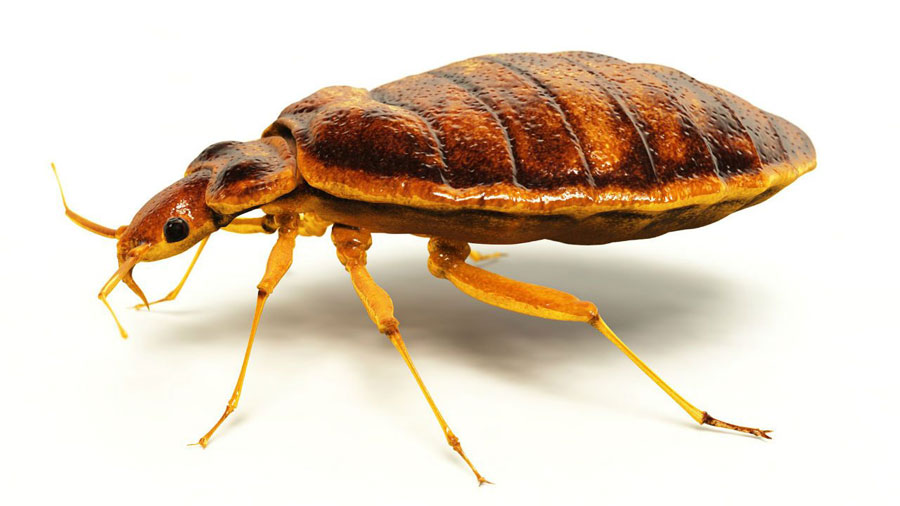
Bedbugs are small, ovoid, brown insects that live on the blood of humans and animals alike. Adult bedbugs have flattish bodies roughly the size of an apple seed. After feeding, however, their bodies swell and are a reddish colour due to being filled with blood.
Bedbugs can’t fly, but they can move very quickly along floors, ceilings and walls. They also have a high reproduction rate, meaning that the female can potentially produce several hundred eggs in her lifetime. These eggs will be roughly the size of a small speck of dust and will likely disregarded as just that.
Bedbug young are called nymphs until they reach maturity. Before they reach maturity, however, they will shed their skins up to five times, and each time they will feed on your blood before shedding. Depending on the conditions they find themselves in, the bedbugs can reach full maturity inside of a month, allowing them to produce up to three generation within a year, or even possibly more.
Bedbugs are a real nuisance and often a source of discomfort, but fortunately they are not known to transmit any diseases.
Where do bedbugs like to hide?
Bedbugs will enter your home through one or a few of a variety of means. These are primarily through luggage, clothing, used beds and couches, and even pets. Their flat bodies make it possible for them to fit into very narrow spaces and remain undetected. Unlike Ants and Bees, bedbugs are not nest dwellers. They tend to live in groups wherever they are hiding. True to their name, bedbugs typically hide in mattresses, box springs, bed frames and headboards. From here they have ample opportunity and access to nibble on you while you are sleeping at night.
Even though they are called bedbugs, they are unlikely to remain in the bed or even the bedroom. They will inevitably spread across the bedroom, inhabiting whichever protected crevice they can crawl into, and eventually migrating to other rooms or even neighbouring apartments.
Bedbug live solely on the consumption of blood. This being said, the presence of bedbugs in your home is not a sign of uncleanliness at all. They are just as likely to be found in the most immaculately cleaned houses, and hotels, as they could be in filthy, run down slums.
When do bedbugs bite?
Bedbugs are primarily active during the night, and normally bite people while they are asleep. They feed by piercing the skin and withdrawing blood through an elongated beak. The bugs feed from three to 10 minutes to become engorged and then crawl away unnoticed.
Most bedbug bites are painless at first, but later turn into itchy welts. Unlike flea bites that are mainly around the ankles, bedbug bites are on any area of skin exposed while sleeping. Also, the bites do not have a red spot in the centre like flea bites do.
People who don't realise they have a bedbug infestation may attribute the itching and welts to other causes, such as mosquitoes. To confirm bedbug bites, you must find and identify the bugs themselves.
What are the signs of infestation?
- Blood stains on your sheets or pillowcases
- Dark or rusty spots of bedbug excrement on sheets and mattresses, bed clothes, and walls
- Bedbug faecal spots, egg shells, or shed skins in areas where bedbugs hide
- An offensive, musty odour from the bugs' scent glands
- If you suspect an infestation, remove all bedding and check it carefully for signs of the bugs or their excrement. Remove the dust cover over the bottom of the box springs and examine the seams in the wood framing. Peel back the fabric where it is stapled to the wood frame.
Generally it is safest and most effective to hire an experienced pest control professional for bedbug extermination. If you are uncertain about signs of bedbugs, call XPest Pest Control Service. We know what to look for.